In the intricate dance of forest ecosystems, a fascinating economic game plays out beneath our feet. The symbiotic relationship between trees and mycorrhizal fungi has long fascinated scientists, but new research reveals this partnership operates under sophisticated economic principles. A groundbreaking Nash equilibrium model now explains how these organisms negotiate resource allocation through vast underground networks, balancing cooperation and competition in a delicate biological marketplace.
The concept of a "carbon economy" in forests refers to the complex exchange system where trees trade photosynthetic products with fungal partners in return for nutrients. For decades, ecologists viewed this as purely mutualistic harmony. However, advanced modeling demonstrates that each participant actually strategizes like players in an economic game, optimizing their returns while minimizing costs. The Nash equilibrium framework - famous in game theory for analyzing competitive systems where players' optimal strategies depend on others' choices - perfectly captures this biological negotiation.
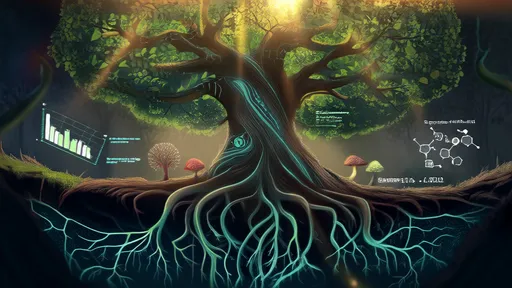
Mycorrhizal networks form the physical infrastructure for this biological economy. These fungal filaments connect multiple trees across forest stands, creating what some researchers call the "wood wide web." Through these connections, resources flow between organisms in patterns that mirror financial markets more than simple biological systems. The new model reveals how individual trees adjust their "investments" in fungal partnerships based on environmental conditions and the behavior of neighboring plants.
What makes this system extraordinary is its dynamic equilibrium. Trees don't simply give fungi as much carbon as they can produce, nor do fungi provide unlimited nutrients. Instead, each partner contributes just enough to maintain the relationship while conserving resources for other needs. This precisely matches the Nash equilibrium concept where no player can benefit by unilaterally changing strategy while others keep theirs constant. In forest terms, if a tree suddenly gave more carbon to fungi without receiving additional nutrients, it would lose competitive ground to neighboring trees.
The modeling breakthrough came when researchers recognized that trees face competing priorities in allocating their carbon. They must balance growth, reproduction, defense against pests, and maintaining fungal partnerships. Similarly, fungi distribute nutrients among multiple tree partners of varying quality. The Nash equilibrium emerges from these competing demands, creating a stable pattern of resource distribution across the network.
Field studies supporting the model show fascinating patterns. During drought conditions, certain tree species increase carbon allocation to fungi that provide better water access, while reducing investment in less helpful partners. Nearby trees observe these shifts through chemical signaling in the network and adjust their own fungal investments accordingly. This creates cascading reallocations across the forest floor - a biological version of market adjustments to changing commodity values.
Climate change adds urgency to understanding these dynamics. As atmospheric CO2 levels rise, the carbon economy of forests undergoes profound shifts. Some tree species may gain negotiating power in fungal partnerships by having more carbon to trade, potentially altering entire ecosystem structures. The Nash equilibrium model helps predict which species might thrive or decline under these changing conditions based on their economic strategies within the mycorrhizal marketplace.
Practical applications are emerging from this research. Forest managers might one day "nudge" these natural economic systems toward desired outcomes by strategically planting trees that influence network dynamics. In degraded lands, introducing certain fungal partners could help establish more resilient ecosystems by kickstarting beneficial economic exchanges. The model even suggests ways to enhance carbon sequestration in forests by optimizing these natural trading systems.
This interdisciplinary approach - blending ecology, mathematics, and economics - reveals nature's sophistication in solving complex resource allocation problems. The forest floor operates not as a utopian commune but as a vibrant marketplace where organisms negotiate, compete, and cooperate according to rules that human economists would recognize. As we face global challenges of resource management and climate change, these natural economic systems offer both inspiration and practical solutions waiting to be unlocked.
The next frontier of this research explores how disturbance events like fires or pest outbreaks reset these economic networks. Preliminary findings suggest forests may have "recovery protocols" encoded in these economic relationships, where surviving trees temporarily alter their resource allocation strategies to stabilize the system. Understanding these mechanisms could revolutionize our approach to ecosystem restoration and resilience planning in an era of environmental change.
By /Aug 18, 2025

By /Aug 18, 2025

By /Aug 18, 2025

By /Aug 18, 2025

By /Aug 18, 2025

By /Aug 18, 2025

By /Aug 18, 2025
By /Aug 18, 2025

By /Aug 18, 2025

By /Aug 18, 2025

By /Aug 18, 2025

By /Aug 18, 2025

By /Aug 18, 2025

By /Aug 18, 2025

By /Aug 18, 2025

By /Aug 18, 2025

By /Aug 18, 2025

By /Aug 18, 2025

By /Aug 18, 2025

By /Aug 18, 2025
